Warmth and Authenticity: Using Knitted Wool Texture Backgrounds
In a digital world often dominated by sharp vectors and flat colors, there is a distinct hunger for materials that feel tactile and genuine. We are constantly looking for ways to bring the comfort of the physical world into our digital designs. This is precisely why Knitted Wool Texture Backgrounds have surged in popularity among designers, crafters, and small business owners. These assets offer an immediate visual shorthand for warmth, care, and handmade authenticity. When you use a high-quality knitted pattern, you are not just filling empty space; you are evoking a sensory experience that reminds viewers of cozy winter evenings, soft scarves, and the intricate effort of craftsmanship.
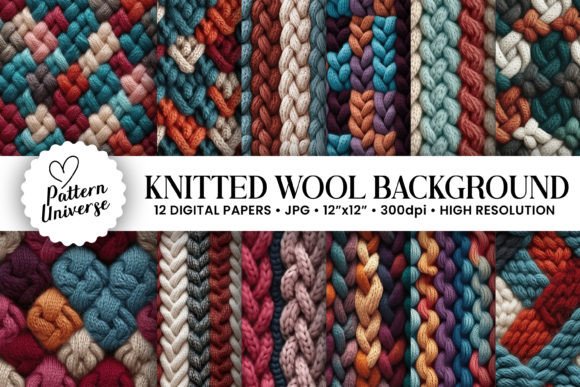
The visual characteristics of these textures are rich and complex. A true wool texture is defined by its interlocking loops, creating a subtle, repetitive grid that is both organic and structured. Depending on the specific pattern—whether it is a tight jersey knit or a chunky cable weave—these backgrounds add a layer of depth that flat design simply cannot replicate. The "personality" of Knitted Wool Texture Backgrounds is undeniably cozy, approachable, and traditional, yet it can be styled to feel modern and chic. The slight variations in the "yarn" strands catch the light in different ways, creating micro-shadows that give the image a three-dimensional quality. This level of detail is crucial for maintaining high production values, especially when the final output is intended to look professional and polished.
Practical Applications: From Tumbler Wraps to Editorial Design
Understanding where to deploy these textures is key to maximizing their impact. Because the included files are high-resolution 300dpi and sized at 3600 x 3600 pixels (12" x 12"), they are incredibly versatile for both digital and print applications. For physical products, these are perfect for gift wrapping and greeting cards. Imagine a holiday card where the background isn't just a solid color, but a detailed cable-knit pattern that you can almost feel. It immediately elevates the perceived value of the item. Similarly, for scrapbook enthusiasts and creators of invitations, these seamless patterns provide a cohesive backdrop that anchors photos and typography without overwhelming them.
In the commercial sphere, the utility of Knitted Wool Texture Backgrounds extends heavily into packaging design and brand identity. If you are a small business owner selling candles, soaps, or artisanal goods, using a wool texture on your labels or tumbler wraps reinforces the "handmade" aspect of your brand. It tells a story of warmth and organic ingredients before the customer even reads a word. For digital marketers and bloggers, these textures serve as excellent social media graphics. A knitted background paired with a clean sans serif font creates a beautiful contrast between the organic texture and modern typography, making your Instagram posts or Pinterest pins stand out in a crowded feed.
Integrating Texture with Typography and Layout
One of the most common challenges when working with textured backgrounds is ensuring readability. This is where a solid understanding of visual hierarchy becomes essential. Because Knitted Wool Texture Backgrounds are visually "busy" on a micro-level (due to the yarn fibers), they work best when paired with typefaces that are bold and clear. A heavy display font or a sturdy serif font often stands up well against the texture. Conversely, using a delicate script font or a light handwritten font directly on top of a detailed knit can sometimes get lost.
To solve this, consider using design techniques that aid legibility. Placing a semi-transparent overlay or a solid shape behind your text allows the texture to frame the message rather than compete with it. This is a staple in editorial design and web design, where background images must never compromise the clarity of the content. When evaluating your font pairing, test how the ascenders and descenders of your chosen typeface interact with the loops of the wool. The goal is to ensure that the background enhances the brand perception of quality and warmth without causing eye strain for the viewer.
Maximizing Your Design Assets
When you download a set of digital papers, you are acquiring design assets that should work hard for you. The value of this specific collection lies in its seamless nature and high resolution. At 300dpi, these patterns are suitable for professional print jobs, ensuring that the texture doesn't pixelate on large format prints like posters or banners. The "seamless" aspect is particularly vital for web design and large surface applications like tumbler wraps. A seamless pattern tiles perfectly, meaning you can extend it infinitely in any direction without visible breaks or awkward lines, maintaining the illusion of a continuous piece of fabric.
For those involved in logo design or creating brand identity kits, these textures can be used as masking layers. Imagine a logo mark where the fill isn't a flat color, but a texture of wool. This adds a tactile element to your branding that can be carried across business cards, letterheads, and website headers. It creates a cohesive visual identity that feels curated and intentional. Whether you are a hobbyist making a family photo book or a professional designer working on a winter marketing campaign, having a library of high-quality textures allows you to adapt your style to the season or the project's emotional tone quickly.
Ultimately, the appeal of Knitted Wool Texture Backgrounds lies in their ability to communicate comfort and care. In an era of automation, visuals that suggest the human hand and traditional craftsmanship resonate deeply with audiences. By utilizing these high-resolution assets effectively—paying attention to readability, contrast, and consistency—you can elevate your projects from simple designs to immersive experiences. Whether for personal craft projects or commercial marketing materials, these textures offer a timeless foundation for creativity.